Expert Dishwasher Repair in Dedham, MA
Appliance Repair for Homes & Businesses in Dedham, Readville, Hyde Park, Massachusetts and Nearby Areas
Dishwasher Repair in Dedham, Massachusetts | Appliance Repair Pros
Dishwasher Repair in Dedham, Massachusetts, is a core service for Appliance Repair Pros because we know how quickly a kitchen becomes disorganized when you are forced to wash every plate and glass by hand. We help homeowners in Dedham, Hyde Park, Readville, and the surrounding neighborhoods get their kitchens back to full functionality. Whether you are dealing with a unit that leaks water onto the floor, refuses to drain, leaves food residue on dishes, or simply will not turn on, our team is ready to respond. We understand the specific plumbing challenges found in local homes, from the historic properties in Precinct 1 with older pipes to the modern condo developments near the Dedham Mall that require strict noise control and leak prevention.
Our approach to repair is built on accurate diagnostics rather than guesswork. We respect your home by arriving on time, protecting your floors, and keeping our work area clean. You need a technician who can identify whether a drainage issue is a simple clog or a failing pump so you do not waste money on unnecessary parts. We focus on finding the root cause to ensure reliable performance for years to come. Contact us today to schedule your service.
Dishwasher Repair Services in Dedham
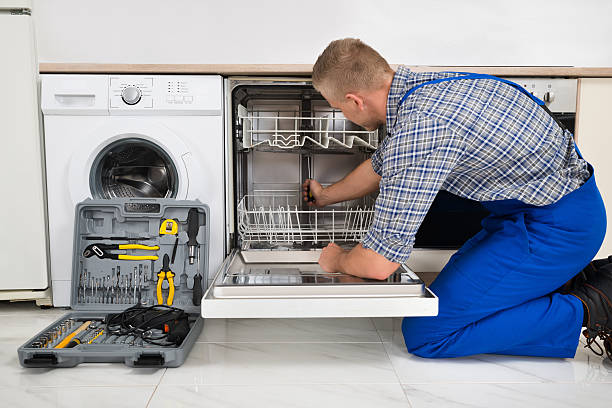
Modern dishwashers are sophisticated appliances that rely on a complex coordination of water temperature, spray pressure, and cycle timing to sanitize your dishware. When one part of this system fails the result is often dirty dishes or a kitchen flood. We provide comprehensive repair services for all major configurations found in Dedham homes. We handle everything from standard built in units to high end drawer models.
Dishwasher systems we work on:
- Standard built in under counter dishwashers
- Integrated panel ready units that match your cabinetry
- Portable freestanding dishwashers
- Double drawer dishwashers
- High efficiency smart dishwashers with Wi-Fi
- Top control models with hidden buttons
- Front control models with digital displays
- Compact 18 inch units for smaller kitchens
What makes dishwasher repair tricky:
- Water inlet valves that can fail electrically or mechanically
- Circulation pumps that lose pressure over time
- Electronic control boards located inside humid doors
- Hidden leaks that damage subfloors before they are seen
- Drain check valves that prevent dirty water backflow
- turbidity sensors that detect soil levels
- Complex door latch assemblies with safety interlocks
- Hard water mineral buildup affecting internal seals
Common Dishwasher Problems We Fix
Dishes come out dirty or covered in residue
The most frustrating issue for a homeowner is opening the dishwasher after a long cycle only to find food stuck to the plates or a gritty white film on the glasses. This defeats the entire purpose of the appliance. In Dedham, where water hardness can vary, mineral deposits often play a role. However, this symptom usually points to a lack of water pressure or an inability to heat the water to the 120 degrees required to dissolve detergent fats. If the spray arms cannot spin fast enough or if the water is lukewarm the cleaning chemical reaction simply does not happen.
Likely causes:
- Clogged spray arm jets blocked by food particles or seeds
- Worn circulation pump impeller unable to push water
- Inlet valve not letting enough water into the tub
- Burnt out heating element resulting in cold washes
- Detergent dispenser door failing to open
- Blocked fine particle filter recirculating grit
How we diagnose it
We listen to the wash motor to hear if it is surging or straining which indicates a failing pump or low water fill. We manually inspect the spray arms for debris and check the filter assembly for damage. We also test the heating element for continuity to ensure it can boost the water temperature. We verify that the water level inside the tub reaches the heating element during the fill cycle.
What you can do right now
Check the spray arms by spinning them by hand to ensure they move freely and are not hitting a tall plate. Remove the bottom filter and rinse it under hot water to clear any heavy debris. Run the hot water at your kitchen sink before starting the dishwasher to ensure the cycle starts with hot water.
Dishwasher is not draining and has standing water
Finding a pool of gray, smelly water at the bottom of your dishwasher is a common complaint. While a small amount of water in the sump is normal, water covering the filter screen or spilling out when you open the door indicates a drainage failure. This can lead to odors and leaks if not addressed. It often involves the path from the drain pump to the garbage disposal or house plumbing.
Likely causes:
- Blocked drain hose usually at the disposal connection
- Failed drain pump motor
- Broken impeller inside the drain pump
- Stuck check valve allowing dirty water to return
- Clogged air gap on the sink deck
- New garbage disposal installed with the knockout plug left in
How we diagnose it
We force the unit into a drain cycle and listen for the hum of the pump. If the pump runs but water does not move we look for physical blockages. We inspect the check valve which acts as a one way gate for water. We also check the electrical supply to the drain pump to ensure the control board is sending the signal to empty the tub.
What you can do right now
Check your kitchen sink to make sure it is draining properly as a clogged sink pipe will block the dishwasher too. If you have an air gap cylinder on the sink next to the faucet check if water is shooting out of it. If you recently installed a garbage disposal make sure the plastic plug was removed from the dishwasher inlet.
Water is leaking onto the kitchen floor
A leaking dishwasher can cause significant damage to hardwood floors and subflooring, especially in second floor laundry or kitchen areas in condos. The leak might appear as a puddle in front of the machine or water seeping into the cabinet below the sink. Leaks are treacherous because they can be slow and hidden until the floorboards start to warp.
Likely causes:
- Worn or torn door gasket seal
- Loose hose clamp on the water inlet or drain line
- Cracked water inlet valve body
- Leaking pump seal underneath the unit
- Corroded heating element nuts
- Dishwasher is not level causing water to slosh over the front lip
How we diagnose it
We remove the lower kickplate panel and use a flashlight to observe the bottom of the unit while it runs. We look for drips coming from the motor shaft, the inlet valve, or the corners of the door. We also check the alignment of the door strike to ensure the door is pulling in tight against the gasket.
What you can do right now
If you see active water turn off the water supply valve usually located under the sink. Wipe up the water immediately to prevent wood damage. Check the door seal for any visible cracks or food debris that might be preventing a good seal.
Dishwasher will not start or has no power
You load the dishes, add detergent, press the start button, and nothing happens. The lights might be off completely or the start button might blink without engaging the cycle. This dead unit scenario is frustrating because it forces you to wash everything by hand immediately.
Likely causes:
- Tripped circuit breaker in the basement panel
- Blown thermal fuse within the control panel
- Broken door latch or switch sensing the door is open
- Failed main control board
- Loose wire connection in the junction box
- Child lock setting is activated
How we diagnose it
We test for power at the junction box where the house wires meet the appliance. If power is present we move to the door switches to ensure they have continuity when the door is closed. We check the thermal fuse which is a safety device designed to cut power if the board overheats. We also inspect the user interface for stuck buttons.
What you can do right now
Check your main electrical panel to see if the breaker has tripped and reset it if necessary. Look at the control panel to see if a “Control Lock” or “Child Lock” light is illuminated and try holding the lock button for three seconds to release it.
Cycle takes too long to finish
If your dishwasher used to finish in 90 minutes but now runs for three or four hours it is a sign that the sensors are struggling to satisfy the cycle requirements. Modern units will extend the wash time if they detect the water is not hot enough or if the soil sensor sees the water is still dirty.
Likely causes:
- Heating element failure forcing a long water heat delay
- Thermostat or thermistor reading incorrect temperatures
- Dirty optical soil sensor unable to see clear water
- Clogged filters restricting water flow
- Siphoning issue where water leaves the tub during the wash
How we diagnose it
We monitor the amperage draw of the heating element to see if it is activating. We inspect the soil sensor for cloudy lenses or mineral buildup. We also check the installation of the drain hose to ensure it has a high loop which prevents water from siphoning out during the wash cycle.
What you can do right now
Run the hot water at the sink until it is steaming hot before you start the dishwasher. This reduces the time the appliance needs to heat the water. Clean the sensor area inside the tub with a soft cloth and vinegar.
Dishwasher makes loud grinding or humming noises
Dishwashers should be relatively quiet. A sudden loud grinding, buzzing, or thumping noise indicates a mechanical obstruction or failure. Ignoring these sounds can lead to a motor burnout or a leak if a foreign object punctures a component.
Likely causes:
- Hard object like a bone or glass shard in the pump chopper
- Worn out wash motor bearings
- Drain pump vibrating against the floor
- Spray arm hitting a tall item
- Loose mounting brackets
How we diagnose it
We pinpoint when in the cycle the noise occurs. A noise during the wash points to the circulation motor while a noise during the drain points to the drain pump. We inspect the chopper blade assembly area for foreign objects. We also check the leveling legs to ensure the unit is stable.
What you can do right now
Open the door and spin the spray arms to see if they hit any dishes. Check the bottom of the tub for loose utensils or hard debris that might be rattling around.
Dishes are not drying
Opening the door to find dripping wet plastic and glass means the drying system is not working. While plastics are hard to dry completely, ceramic and glass should be dry. This issue can be caused by heater failure or vent fan issues.
Likely causes:
- Heating element not working during the dry cycle
- Rinse aid dispenser is empty or broken
- Vent fan motor failed
- High limit thermostat cut off power to the heater
- Vent wax motor not opening the vent
How we diagnose it
We test the heating element and the high limit thermostat. We check the rinse aid dispenser to see if it is releasing fluid. On models with a fan assist dry we test the small fan motor located in the door or top of the tub.
What you can do right now
Ensure your rinse aid dispenser is full as this chemical breaks the surface tension of water allowing it to slide off dishes. Use the “Heated Dry” or “Sanitize” option to increase the drying temperature.
Soap dispenser door does not open
If you find the detergent tablet sitting undissolved in the bottom of the tub or stuck in the cup, the dispenser failed to open at the right time. This means your dishes were washed with just hot water.
Likely causes:
- Dispenser spring is broken
- Wax motor or solenoid that opens the door failed
- Dishes in the lower rack blocked the door from opening
- Detergent residue gummed up the latch
- Control board failed to send the open signal
How we diagnose it
We test the small actuator that triggers the door release. We inspect the cover and spring mechanism for physical damage or sticky residue. We verify the wiring harness connecting the dispenser to the door panel.
What you can do right now
Make sure tall plates or cutting boards are not placed in the lower rack right in front of the dispenser door. Clean the dispenser cup with warm water to remove old sticky soap.
Safety Notes for Dishwasher Issues
Dishwashers combine electricity and water which creates inherent risks when components fail. While many issues are just nuisances some can be dangerous. Safety is our primary concern when entering your home in Dedham or Hyde Park.
- If you see water leaking near electrical outlets or switches do this first: Do not touch the appliance or the water. Go immediately to your main circuit breaker panel and turn off the breaker labeled “Dishwasher.” Only then should you attempt to clean up the water.
- If you see smoke or smell burning plastic do this first: Turn off the appliance at the control panel if possible. If the smell persists turn off the circuit breaker. Do not open the door immediately as the influx of oxygen could flare up a small fire inside the controls.
- If you see mold or black slime in the interior do this first: This indicates a drainage issue or low water temperature. Run a cycle with a dishwasher cleaner or a cup of vinegar. Wear gloves when cleaning filters to avoid contact with bacteria.
Brands We Service for Dishwasher Repair in Dedham
We have extensive experience with the major appliance brands found in US homes. Each manufacturer uses different engineering logic for their water systems and electronics. We group them by their design families to provide expert diagnostics for your specific model.
Whirlpool family and similar designs (Whirlpool, Maytag, KitchenAid, Amana)
These are the most common dishwashers we see in the Dedham area. They are generally reliable but often share common pump and motor assemblies. KitchenAid models often feature a diverter motor that switches water between racks which is a specific failure point we check.
Common issues we see with these models:
- Diverter motor seal leaks
- Circulation pump motor failure
- Top rack adjuster plastic breaking
- Control board thermal fuse blowing
- Chopper blade assembly breaking
Why correct diagnosis matters
Replacing the entire pump assembly when only the chopper is broken is a waste of money. We know how to disassemble these specific wash motors to replace only the failed component when possible.
GE family (GE, Hotpoint, and related lines)
GE dishwashers use a distinct filtration system and often have the control board located under the tub rather than in the door. This design protects the board from steam but makes it susceptible to floor leaks. We are familiar with the specific service modes required to test GE sensors.
Common issues we see with these models:
- Control board failure due to power surges
- Inlet valve solenoids failing
- Door latch sensor alignment issues
- Filter screen clogging with mineral deposits
Why correct diagnosis matters
GE units often have specific diagnostic codes that are not displayed to the user but can be accessed by a technician. Reading these codes is essential for fixing intermittent problems.
Samsung and LG
These brands are known for high tech features and quiet operation. Samsung often uses a “WaterWall” technology or linear wash arms while LG uses Direct Drive motors. These unique mechanical designs require specific knowledge to repair effectively.
Common issues we see with these models:
- LE or OE error codes indicating water flow issues
- WaterWall reflector getting stuck
- Rubber drain pump check valves tearing
- Touch control panels becoming unresponsive
Why correct diagnosis matters
The electronics in these units are sensitive. A misdiagnosis can lead to replacing expensive main boards when the issue is actually a simple wiring harness fault. We test the harness first.
Bosch and Thermador
German engineering makes these dishwashers some of the quietest and most efficient on the market. They use a unique flow through heater and often lack a hard food disposer relying instead on a fine filter. They also have a complex base pan system with flood sensors.
Common issues we see with these models:
- E15 error code indicating water in the base pan
- Drain pump blockages due to glass or seeds
- Inlet valve failure causing slow fill
- Door spring tension failure
Why correct diagnosis matters
Bosch units are designed to shut down completely if they detect even a drop of water in the safety pan. We know how to locate the microscopic leaks that trigger this safety system.
Frigidaire and Electrolux
These units are popular in many renovations and condos in the Readville area. They often use a specific orbital spray arm design. We frequently see issues with the water delivery tube seals and the door vent assemblies.
Common issues we see with these models:
- i20, i30, or i40 error codes
- Upper wash arm tube disconnecting
- Heating element connections burning out
- Door vent fan becoming noisy
Why correct diagnosis matters
The error codes on these units can be vague. An “i20” draining error can actually be caused by a pressure sensor issue. We verify the sensor readings before assuming the pump is bad.
Understanding Common Dishwasher Error Codes
Modern dishwashers communicate problems through digital codes on the display. These codes are helpful clues but they are rarely the final answer. A code describes a symptom not the root cause. We use these codes as a starting point for our testing.
- LG OE / Samsung 5C: Indicates a drain error. The machine tried to drain but water remains. This points to a clogged hose, bad pump, or pressure switch issue.
- LG IE / Samsung 4C: Indicates a water inlet error. The machine did not fill with water in the expected time. Usually a closed valve, kinked hose, or bad inlet solenoid.
- Bosch E15: The flood protection system has activated. Water is in the base pan underneath the tub. The unit will run the drain pump continuously even with the door open.
- Bosch E24 / E25: Drainage error. E24 often means the drain hose is blocked or the cover on the pump is missing. E25 usually means the pump impeller is jammed or broken.
- Whirlpool/KitchenAid Clean Light Blinking: This is a heater fault code. The machine did not detect the temperature rising. It could be the element, the thermostat, or the control board.
- Frigidaire i20 / i30: i20 is a drain error. i30 indicates a leak is detected in the bottom pan similar to the Bosch E15.
- GE H20: A generic error indicating a water supply problem often related to the inlet valve or float switch.
- General “PF” Code: Power Failure. This means power was interrupted during the cycle. It can be a simple grid outage or a loose wire in the junction box.
Maintenance Tips for Dishwasher Owners in Dedham
To keep your dishwasher running smoothly and avoid the need for repairs we recommend a few simple maintenance habits. Given that some areas of Dedham and nearby Westwood have older pipes or harder water these steps are even more important.
- Clean the filter regularly: Most modern dishwashers have a removable cylinder filter at the bottom. Remove this weekly and rinse it under hot water to remove grease and trapped food particles. A clogged filter reduces cleaning performance significantly.
- Use Rinse Aid: Always keep the rinse aid dispenser full. This fluid is essential for drying and for preventing mineral spots on glassware especially if your water has high mineral content.
- Run the hot water first: Before starting the dishwasher run the kitchen faucet until the water is hot. This ensures the first fill of the dishwasher is hot which helps dissolve the detergent pod immediately.
- Inspect the spray arms: Periodically check the holes in the spray arms. If you see seeds or debris clogging them use a toothpick to clear them out. A clogged hole leaves a blind spot in the cleaning coverage.
- Run a cleaning cycle: Once a month run an empty cycle with a commercial dishwasher cleaner or a cup of white vinegar placed in a bowl on the top rack. This helps remove lime scale and grease buildup from the pump and hoses.
- Do not overcrowd: Water needs to reach every surface to clean it. Overlapping plates or blocking the spray tower with a large pot prevents the water from circulating properly.
- Check the air gap: If you have a silver cylinder next to your faucet check it for clogs. A blocked air gap is a leading cause of drainage issues.
- Leave the door ajar: When the dishwasher is not in use leave the door slightly cracked to allow airflow. This prevents mold and mildew growth on the door gasket.
Service Area for Dishwasher Repair in and Around Dedham, Massachusetts
We are proud to be a local service provider focused on Dedham and the immediate surrounding towns. We know the area well from the rotary at Washington Street to the neighborhoods bordering the Charles River. Our service area is designed to keep travel times short so we can spend more time fixing appliances.
- Dedham (Precinct 1, Oakdale, Riverdale, The Manor, Greenlodge, East Dedham)
- Hyde Park (Fairmount, Readville, Sunnyside)
- West Roxbury
- Westwood (Islington area)
- Readville
- Norwood (near the Dedham line)
Zip codes we serve: 02026, 02136
Frequently Asked Questions
Is it worth repairing a 10 year old dishwasher?
The average lifespan of a modern dishwasher is about 8 to 12 years. If the repair cost is less than 50% of the price of a new unit it is often worth fixing. However if the unit is over 10 years old and requires a major component like a main motor or control board replacement might be the better financial decision. We provide an honest assessment of the condition of your unit before proceeding.
Why does my cycle take 3 hours to finish?
Long cycle times are normal for energy efficient dishwashers. They use less water and energy by soaking dishes longer and using lower motor speeds. However if the cycle suddenly jumps from 2 hours to 4 hours it may indicate a problem with the water heating system or the soil sensor requiring a diagnostic check.
What causes the white film on my glasses?
White film is usually caused by hard water minerals or excess detergent. In Dedham hard water can be a factor. Using a rinse aid is the best way to combat this. You can also try using less detergent as modern concentrated pods can sometimes be too much for soft water conditions leaving a chemical residue.
Do I need to pre rinse my dishes?
You should scrape off large food scraps like bones and corn cobs but you do not need to wash the dishes before loading them. Modern detergents contain enzymes that need food soil to activate. If the dishes are too clean the enzymes may attack the finish on the dishes instead. Scrape but do not scrub.
How often should I clean the dishwasher filter?
If you use your dishwasher daily we recommend cleaning the filter once a week. If you pre rinse your dishes heavily you might get away with once a month. A clean filter is key to preventing grit from being sprayed back onto your clean dishes.
Why is my dishwasher leaking from the front door?
Front door leaks are often caused by a worn gasket or a lower door seal. However they can also be caused by using the wrong type of soap. Regular dish soap creates massive amounts of suds that will push water out of the door. Always use detergent specifically made for automatic dishwashers.
Do you offer emergency dishwasher repair near me?
We prioritize calls involving active leaks that could damage property. If you have a serious leak turn off the water supply to the unit immediately. While we operate during standard business hours we make every effort to fit urgent issues into our schedule as quickly as possible.
How long does a typical repair take?
Most repairs are completed within one hour of arrival if we have the part in stock. Our trucks are stocked with common parts like drain pumps, inlet valves, and thermal fuses. If a special order part is needed we typically can return to finish the job within 24 to 48 hours depending on availability.
Why is there water left in the bottom of my dishwasher?
A small amount of water near the filter is normal and keeps seals moist. However if water covers the filter screen it indicates incomplete drainage. This is often due to a blocked drain hose, a clogged air gap, or a failing drain pump. Check your sink drain first to make sure it is clear.
My buttons are not working, is it the board or the panel?
If some buttons work but others do not it is usually the user interface (the keypad) that has failed rather than the main control board. Moisture can get into the layers of the keypad causing shorts. We can test the ribbon cable connection to determine which part needs replacement.
Conclusion
A broken dishwasher disrupts your daily routine and wastes your time. Appliance Repair Pros is dedicated to restoring convenience to your kitchen with expert dishwasher repair services in Dedham, Hyde Park, and Readville. We combine detailed diagnostics with practical solutions to fix leaks, drainage issues, and cleaning failures. We respect your home and your schedule. Reach out to us for assistance today and let us get your appliance back to working order.